

Exhibiting internationally for the first time comes with a learning curve — different regulations, longer logistics timelines, and venue-specific requirements you won’t encounter domestically. This checklist walks through everything you need to plan for, so your first international show goes smoothly instead of becoming a stressful scramble.

1. Confirm Your Booking Timeline Early
International shows require significantly more lead time than domestic ones — typically 6-8 weeks minimum, factoring in design approval, fabrication, and customs clearance for materials. Booking late is the single biggest reason first-time exhibitors run into avoidable stress.
2. Get a Signed-Off 3D Design Before Anything Else
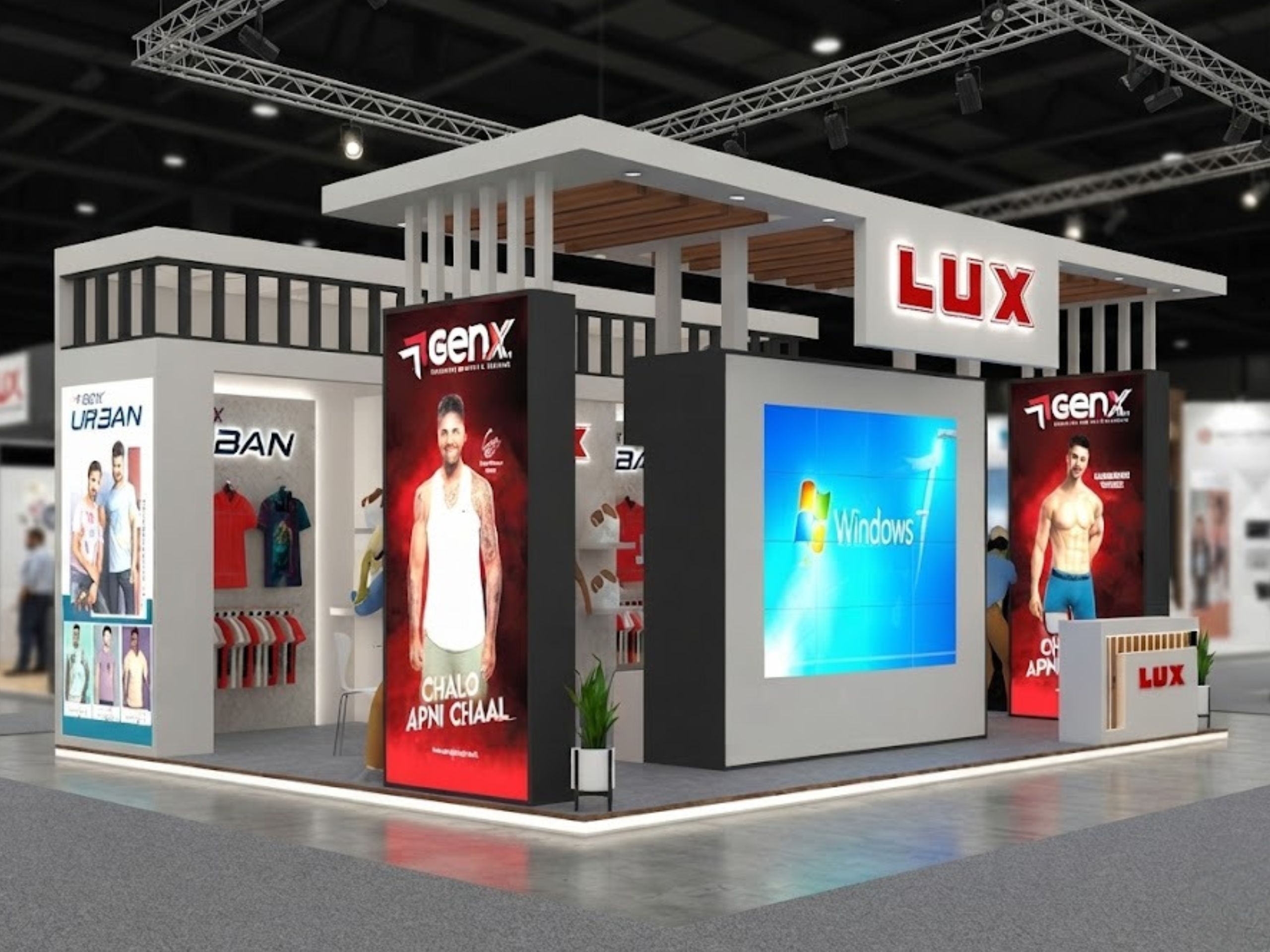
Before fabrication begins, insist on a full 3D design render you can review and approve. This isn’t just about visualising your stand — it’s your reference point for quality control once your team is on-site at the venue, especially when you’re not there to supervise every detail yourself.

3. Understand Who’s Actually Executing On-Site
Ask your stand builder directly: will someone from their team physically be at the venue during installation? Design and coordination happening from India is standard, but execution should be handled by people who are actually present and accountable on the show floor — not left entirely to disconnected local subcontractors.
4. Check Venue-Specific Regulations Early
Every international venue has its own technical requirements — fire safety certifications, material restrictions, height limits, and loading dock schedules. These vary significantly by country and even by city. Ask your stand builder to confirm compliance requirements before fabrication starts, not after.
5. Plan for Customs and Logistics Documentation
Shipping materials, branding elements, or product samples internationally means navigating customs paperwork specific to your destination country. Confirm early who’s responsible for this — your stand builder should have experience managing import documentation for the specific country you’re exhibiting in.
6. Budget for More Than Just the Stand
First-time exhibitors often budget only for design and fabrication, forgetting logistics, on-site labour, dismantling, and potential storage costs for reusable elements. Ask for a complete itemised quote upfront, not just a headline stand-building number.
7. Think About Reusability From Day One
If this is likely to be the first of several international shows, ask whether your stand can be designed with future reuse in mind — even a partially modular approach can save significant cost on your next show, rather than starting from zero every time.
What first-timers usually underestimate
The time between decision and show day. Many first-time exhibitors think of the show as a date on the calendar. In practice it is a chain: booking, brief, design, approvals, fabrication, packing, freight, customs and build-up. A delay at any link moves everything after it, and abroad you cannot make up lost days by working late the night before.
The difference between pictures and drawings. A 3D render shows how the stand will look. Working drawings show how it is built, what it weighs, and how it passes the venue’s checks. Ask for both, and keep them together with the exhibitor manual.
The cost of being far away. A problem you could fix with one phone call in India becomes a day lost when it happens in another time zone. Choose a partner who can solve problems on the ground, and agree who has authority to decide while you are travelling.

How to brief your stand builder for an international show
A good brief saves weeks. Send your builder the following in your first message, and keep the same list for every show you plan afterwards.
- The show name, dates, venue and hall, with the exhibitor manual attached.
- Your stand number, size, floor plan and number of open sides.
- Your products, what visitors should do on the stand, and the one message they should remember.
- Your brand files: logo, colours, fonts and any existing graphics.
- Your budget range, so the design stays realistic from the first concept.
- Your team size, and how many meetings you expect to run at once.
In return, expect a clear timeline, a first concept within days rather than weeks, and questions about your goals. A builder who asks nothing is likely to design for nobody in particular.
Expect also a list of the rules that affect your design: height limits, flooring, electrical load, fire safety and the use of hanging elements. These rules change from venue to venue, and they decide what the final stand looks like more than most people realise. Ask your builder to show you where each rule appears in the manual, so the design and the paperwork match.
Finally, agree how decisions will be made while the stand is being built. Name one person on your side who can approve changes within 24 hours, and give your builder their number. Delays in approval are one of the most common reasons build schedules slip.
A one-page plan for your first show
- Owner: one person in your company who owns the whole show, not one per task.
- Calendar: every organiser deadline, with a name beside it.
- Documents: design drawings, venue approvals, invoices and packing lists in one shared folder.
- Contacts: organiser, venue contractor, freight agent and your builder’s site supervisor on one sheet.
- After the show: who follows up, and by when. Our 72-hour follow-up plan helps here.
For the money side, read about the costs beyond the stand, and for what to avoid, see the seven mistakes Indian exhibitors make abroad.
Frequently asked questions
How early should I start planning my first international show?
As soon as booking opens. Six to eight weeks is the minimum for design, approvals and fabrication, and shipping and customs come on top of that.
Do I need to travel with the stand?
Your sales team should be on the stand. For the build, it helps to have your builder’s supervisor present, since they know the drawings and the venue rules.
Can I use the same stand for another show later?
Yes, if it was planned that way from the start. Ask your builder about a reusable structure before the design is approved.
What if the venue rejects my plan?
Plans are usually reviewed before the show, and a good builder prepares them to the venue’s rules. Submit early so any change can be made in time.
Final Thoughts
Your first international trade show doesn’t need to be a leap into the unknown. With the right lead time, a clear 3D design, and a stand builder who’s genuinely present on-site, most of the uncertainty disappears. If you’re planning your first international show and want a partner who handles this process end-to-end, get in touch — we’ll walk you through exactly what to expect.
Planning Your First International Show? Tell us your show name, city, and stand size — we’ll guide you through the entire process, start to finish. Get Your Custom Stall Design →Get a custom stand design for your next show
Share the show, stand size and budget. We reply within 24 hours.