

Every exhibitor eventually faces the same question: should you invest in a fully custom stand, or go with a modular system? The answer depends less on budget alone, and more on how often you exhibit, how much flexibility you need, and what kind of impression you’re trying to make. This guide breaks down the real differences so you can make the right call for your next show.
What Is a Custom Exhibition Stand?
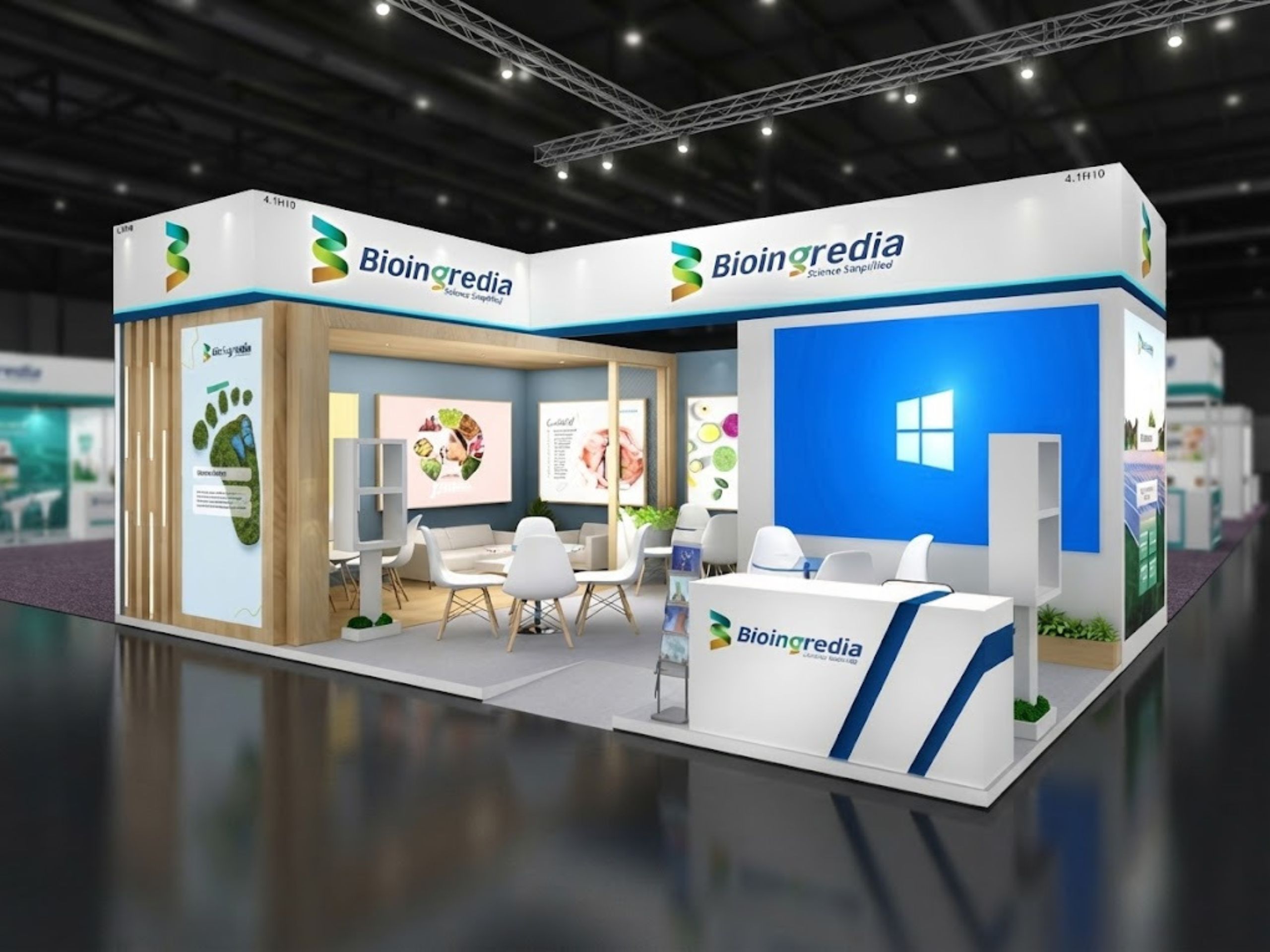
A custom stand is designed and built specifically for one show, one brand, and often one set of dimensions. Every wall, display unit, and lighting element is created from scratch based on your 3D design sign-off. This gives you complete creative freedom — unusual shapes, branded architectural features, and a stand that looks unlike anyone else’s on the floor.

The trade-off is straightforward: custom stands typically cost more upfront and aren’t designed for reuse at a different show with different dimensions. They make the most sense when you’re exhibiting at a flagship show once, or when your brand identity depends on a truly unique presence.
What Is a Modular Exhibition Stand?
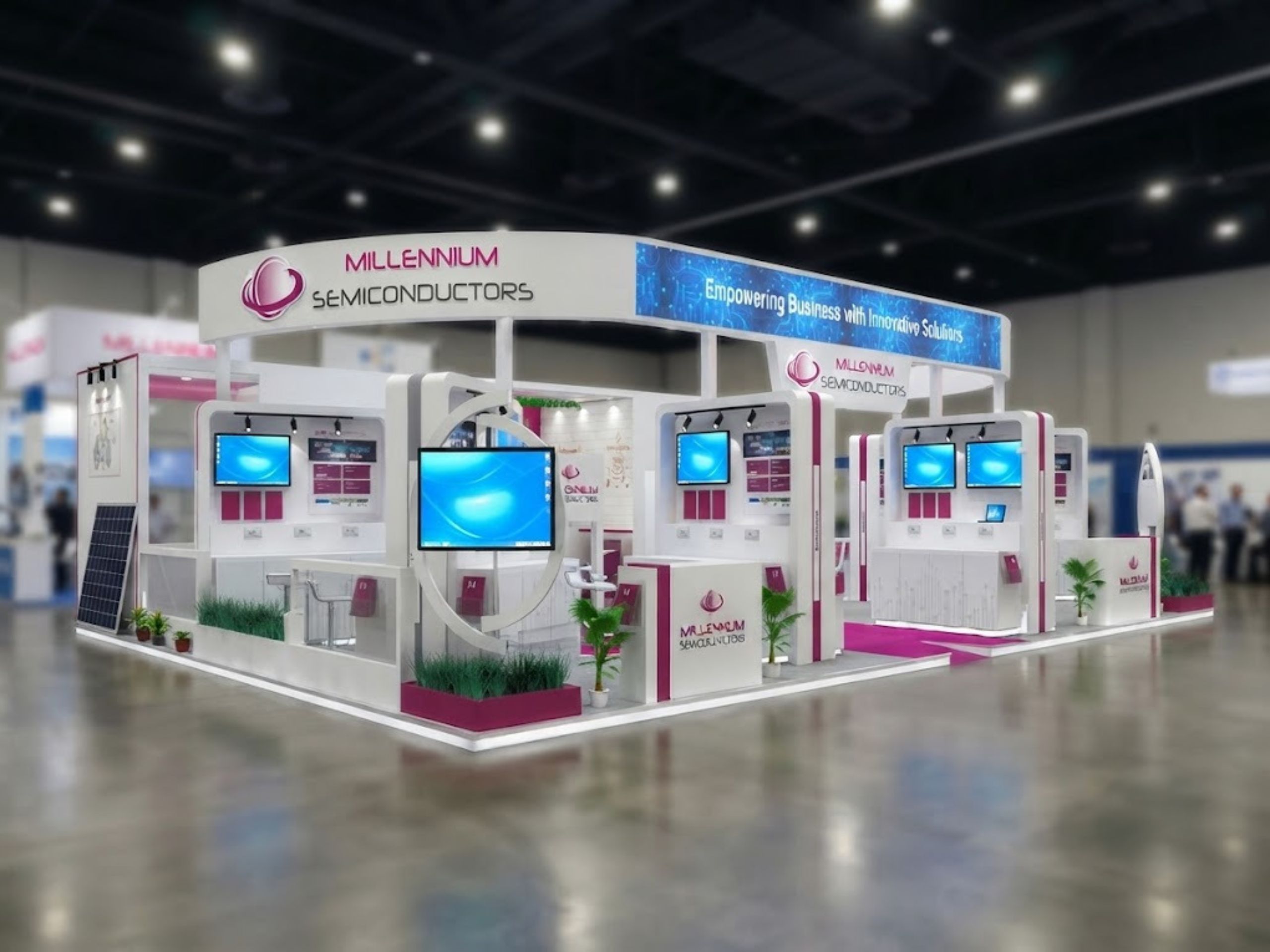
Modular stands use a system of reusable components — panels, frames, and connectors — that can be reconfigured for different booth sizes and shows. Instead of building fresh for every event, you’re essentially reassembling and rebranding a flexible kit.

This makes modular systems significantly more cost-efficient over multiple shows, since the core structure is reused each time. The design still allows for strong branding and professional finishes — it simply works within a more standardised framework than a fully custom build.
Key Differences at a Glance
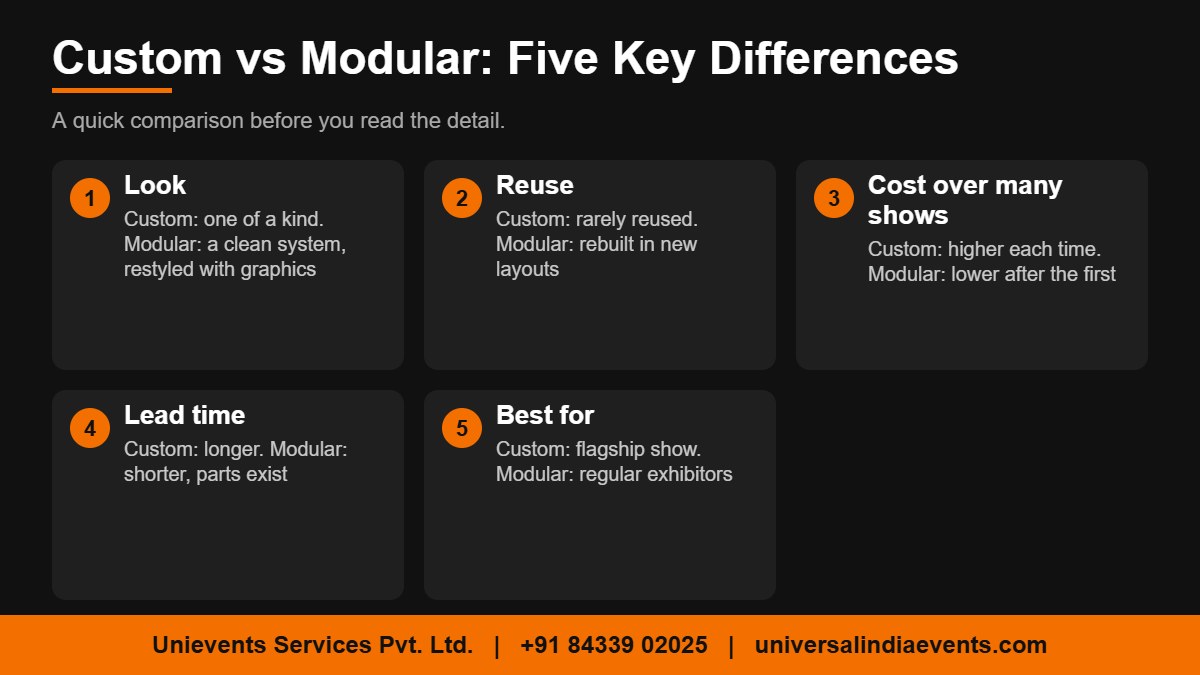
| Factor | Custom Stand | Modular Stand |
|---|---|---|
| Upfront Cost | Higher | Lower |
| Reusability | Limited | High |
| Design Flexibility | Unlimited | Structured but adaptable |
| Best For | Flagship shows, one-off events | Exhibitors attending multiple shows annually |
| Turnaround Time | Longer | Faster |
Look and feel: what each approach can do
Materials and finishes. A custom stand can use almost any material, from timber and fabric to metal, glass and printed surfaces, and each can be shaped to the design. A modular system uses standard frames and panels, so the range of finishes is smaller, but good lighting and well-designed graphics can still give it a premium feel.
Shapes and heights. Curves, tall towers, hanging rings and unusual footprints are where custom stands stand out. A modular stand works best with straight lines and clean geometry, and rewards a design that uses them well.
Graphics. In both cases, graphics carry the message. Modular systems are built for quick graphics changes, which suits exhibitors who show different products at different events. With custom, graphics are part of the architecture and are usually planned with it.
Lighting. Lighting changes how a stand feels more than most exhibitors expect. Custom stands can hide lighting inside the structure. Modular stands can use rails and clip-on fittings that are easy to move between layouts.
Overseas shows. If the show is abroad, think about how the stand travels. Modular kits are designed to pack small and reassemble quickly, while a large custom stand may need more crates and more build-up time. Check the venue rules too, since some limit stand height or structure type.
Which One Should You Choose?
If you’re exhibiting at 3+ shows a year and want to control costs without compromising on branding, modular is usually the smarter long-term investment. If you have one major show where standing out matters more than reusability — a flagship international expo, a product launch, or a milestone anniversary — custom gives you the freedom to make a statement.
Many exhibitors also choose a hybrid approach: a custom-designed shell that incorporates modular internal elements, giving you a unique look with some reusable components built in.
How We Help You Decide
At Unievents, every project starts with understanding your show calendar, budget, and brand goals — not pushing one format over another. Our in-house design and fabrication team can build either format with the same attention to detail, so the decision comes down to what actually serves your business, not what’s easiest for us to produce.
Three situations, three answers
The launch. A company introduces a new product at the biggest show of its year. The stand is part of the announcement, and visitors should remember its shape. Custom is the better fit, because the whole point is to look like nothing else in the hall.
The regular. A manufacturer attends five or six shows a year, in different cities and with different stand sizes. A modular system lets them rearrange the same kit, change the graphics and keep the cost per show under control.
The in-between. A distributor attends two or three shows and wants one memorable feature. A modular base with a custom counter or hero wall keeps costs sensible and still gives visitors something to talk about.
Five questions before you decide
- How many shows will you attend in the next twelve months?
- Will your stand size stay the same, or change from show to show?
- Is the stand itself part of the message, or is the product the star?
- Do you have somewhere to store a kit between shows?
- How much time do you have between decision and show day?
If you want numbers rather than principles, our guide to a three-show cost comparison shows how the cost shapes differ, and the shell scheme vs custom stand guide covers the third option.
Frequently asked questions
Is a modular stand less impressive?
Not necessarily. Finish, lighting and graphics decide the impression. A well-designed modular stand can look as polished as a custom one.
Can a custom stand be reused?
Parts can be, if the design planned for it. A fully bespoke structure for one floor plan usually cannot.
Which is faster to prepare?
Modular, as a rule, because the components already exist. Custom needs design, approval and fabrication from scratch.
Conclusion
There’s no universally “better” option between custom and modular — only what’s better for your specific exhibition strategy. If you’re not sure which direction makes sense for your upcoming shows, get in touch and we’ll help you figure out the right fit based on your actual show calendar and goals.
Get a custom stand design for your next show
Share the show, stand size and budget. We reply within 24 hours.