
Almost every stand company says it does custom work. Some do. Others deliver the same frame and the same panels to every client, with a new logo and colour on top. If you are choosing a custom exhibition booth builder, you need ways to tell the two apart before you pay a deposit. Here are seven checks that expose a template dressed up as custom.
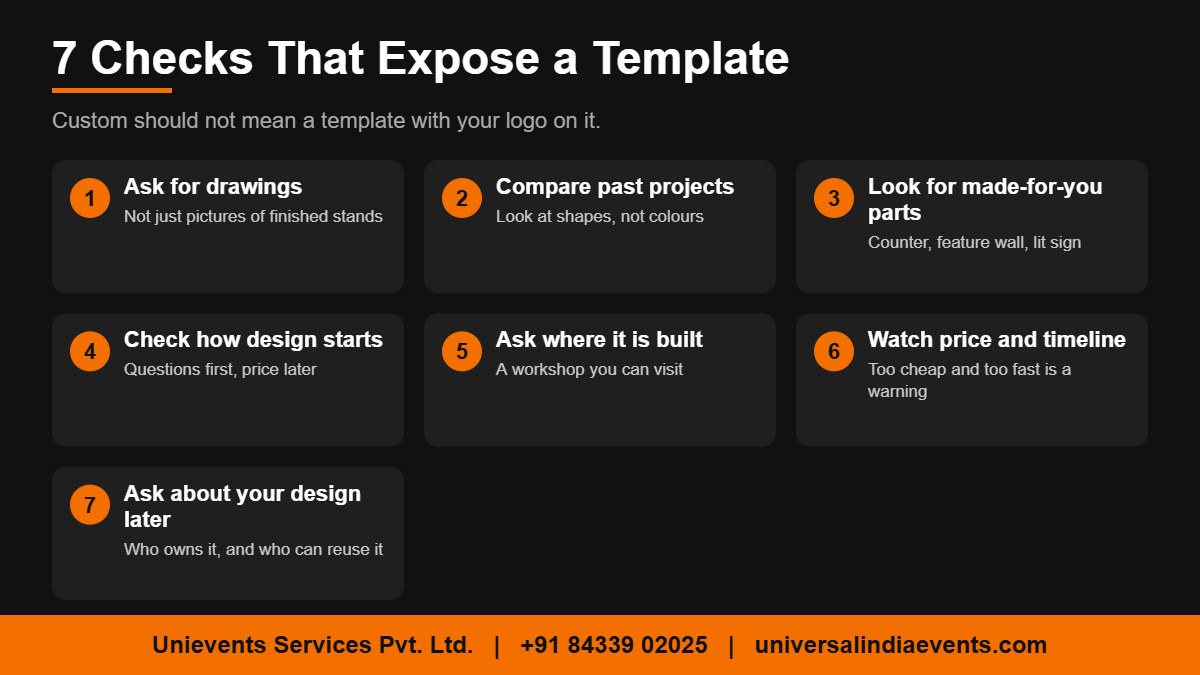
1. Ask for Drawings, Not Just Pictures
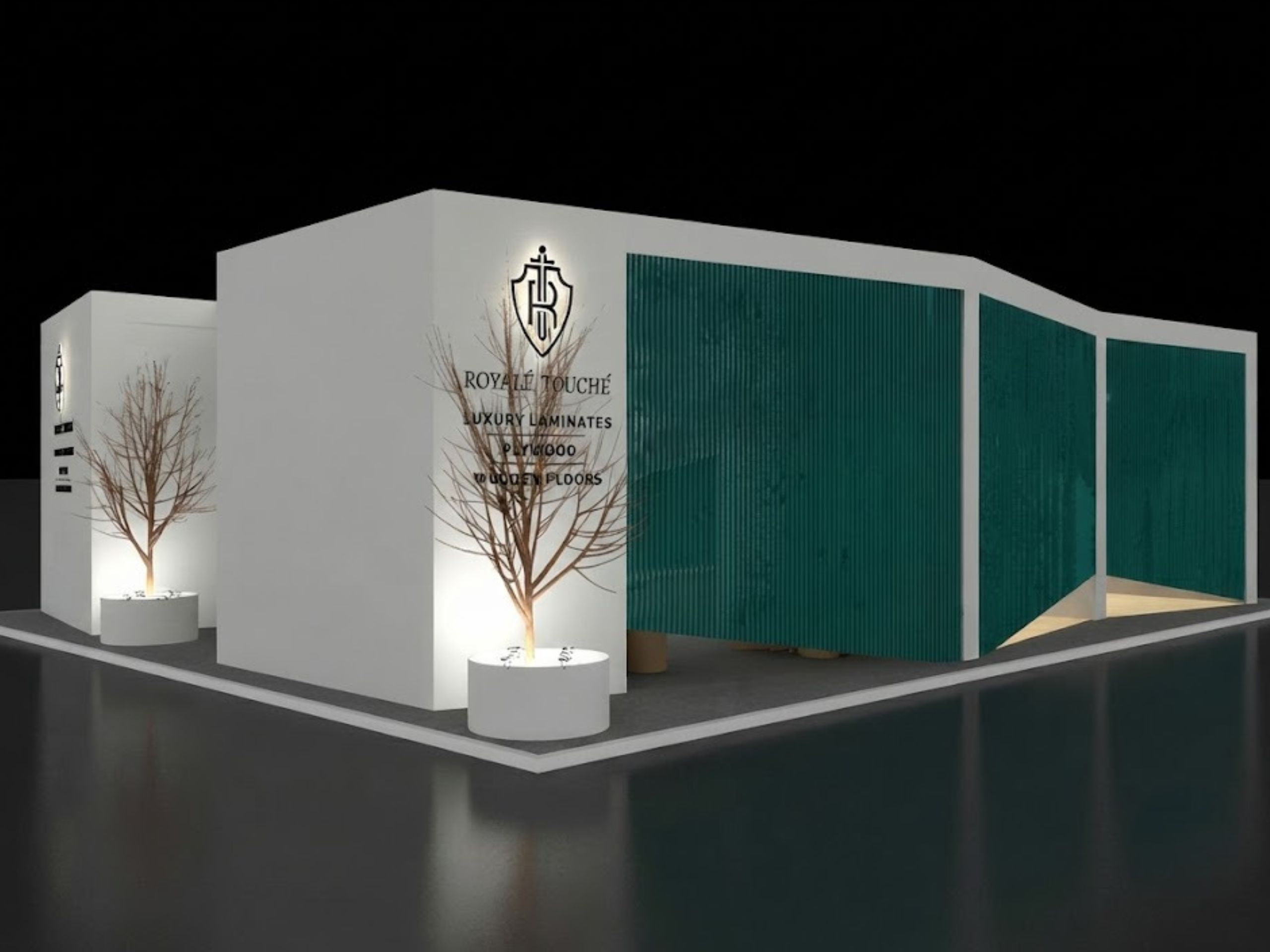
Photos of finished stands show the surface only. Ask the custom exhibition booth builder for the 3D design and the working drawings of two recent projects. If the structure, dimensions and joints look the same in both, you are looking at a template.
2. Compare Past Projects Side by Side
Open the builder’s portfolio and look at the shape of the stands, not the colours. Do the walls, counters and ceilings repeat? A genuine custom builder’s projects look different from each other because each began with a different brief.
3. Look for Elements Made Only for You
Real custom work has at least a few parts that exist only for your brand: a counter shaped like your product, a feature wall with your pattern, a lit sign cut to your logo. Ask which parts of your stand will be made specially and which will come from stock.
- Custom counters, shelves or display units
- A feature wall or hanging element
- Lighting planned around your products
4. Check How the Design Process Starts
A builder who begins with a questionnaire, a site visit or a long call about your goals is designing for you. A builder who sends a price and a stock layout in the first hour is selling a catalogue. See how we start on our 3D exhibition stand design page.
5. Ask Where It Will Be Built
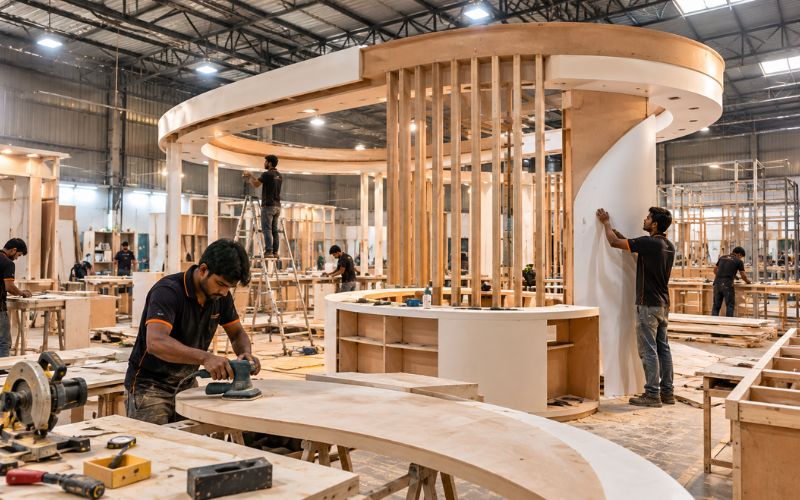
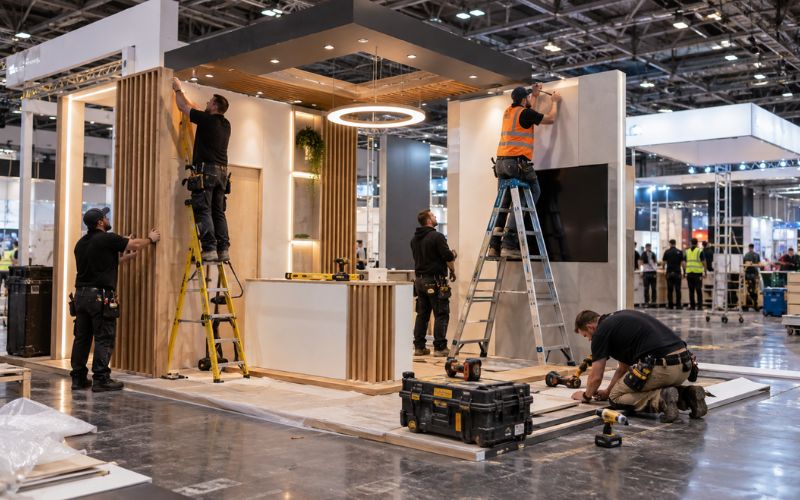
Custom parts need a workshop that can cut, shape and finish them. If the builder cannot show you a workshop, or says the work is “arranged”, the real maker may be someone you never meet. Visit the workshop if you can, or ask for a video walk-through.
6. Watch the Price and the Timeline
Genuinely custom work takes time and costs more than a standard shell. A very low price or a very short timeline suggests parts are being reused. Ask for an itemised quote that shows design and fabrication separately.
7. Ask What Happens to Your Design Afterwards
Ask whether your design will be reused for another client. A responsible builder keeps your concept exclusive. If your stand is meant to be reused across your own shows, ask about modular exhibition stand options that keep a custom look.
Questions to ask on the first call
- Which parts of my stand will be made only for me?
- Can I see the drawings of two recent projects?
- Who designs, and who builds?
- What happens if I want a change after approval?
- Who keeps the design files when the show ends?
The way a builder answers is as useful as the answer. A confident, specific reply usually means the work is real. A vague reply, or a quick move to price, usually means the template is waiting.

What a genuine custom process looks like
- Brief: goals, products, audience, budget and the floor plan.
- Concept: two or three directions, not one design with different colours.
- 3D design and drawings: from several angles, with materials named.
- Approval: written sign-off before anything is made.
- Fabrication and checks: a workshop you can visit, and a pre-fit where possible.
- Installation: the builder’s own team on site.
If you want to see how we think about this, read custom shouldn’t mean a template with your logo on it.
Frequently asked questions
Is a template always bad?
No. A template can be a sensible, low-cost choice, as long as it is sold as one. The problem begins when it is sold as custom.
How can I tell if a stand was custom after the show?
Compare it with the builder’s other projects. If the structure, counters and ceilings repeat, it was probably a template.
Does custom always cost more?
Usually, yes, at the first show. The question is whether the extra cost buys something your brand needs.
Two stands, one brief: a short illustration
Imagine two builders receive the same brief from a food company: a 36 sqm corner stand, a tasting counter and a meeting area. The first builder asks about the product, the visitors and the hall, then sends two concepts, each with its own counter shape and a feature wall made from the brand’s pattern. The second sends a single design within a day, using the same frame it uses for other clients, with the logo and colours changed.
Both stands may look tidy on show day. Only one will have been designed for this company. The difference shows in the details: how visitors move to the counter, where the products sit, how the light falls on the packaging. That is what you are really paying for when you choose custom, and it is what the seven checks help you find.
Protecting your design
Before you sign, ask who owns the design files, and whether the builder can reuse your design for another client. Ask also whether you will receive the drawings at the end of the project. If you plan to reuse the stand, you will need them, and having them agreed in writing at the start prevents a difficult conversation later.
Final Thoughts
A real custom exhibition booth builder can show drawings, explain which parts are unique, and tell you where the work is done. If the answers are vague, you may be paying for a sticker. Talk to Unievents and we will walk you through our process.
Planning Your Next Exhibition?
Share your show name, city and stand size on our contact page, and our team will guide you from brief to build.
Related reading: “Custom” Shouldn’t Mean a Template With Your Logo On It.
Get a custom stand design for your next show
Share the show, stand size and budget. We reply within 24 hours.