

A weak booth design gets ignored on a crowded floor. A rushed build risks structural problems on site. A partner who disappears after the deposit leaves you scrambling days before opening. Each risk is avoidable, if you know what to ask for before you sign.
This guide looks at trade show booth design from the buyer’s side: what a design package should contain, how to read it with a sceptical eye, and what to expect from a partner who stays with you from the first sketch to the last screw.
The short version
Good trade show booth design is a package: concept options, visitor flow, aisle-level 3D views, a graphics plan and working drawings. If a partner shows you only one pretty picture, you have bought a render, not a design.
Three kinds of design partner
The renderer makes attractive images and hands them over. The pictures are good, but nobody has checked whether the stand can be built within the hall’s rules or your budget.
The packager sells a catalogue of standard structures with your logo on top. It is quick and affordable, but your stand will look like a dozen others in the hall.
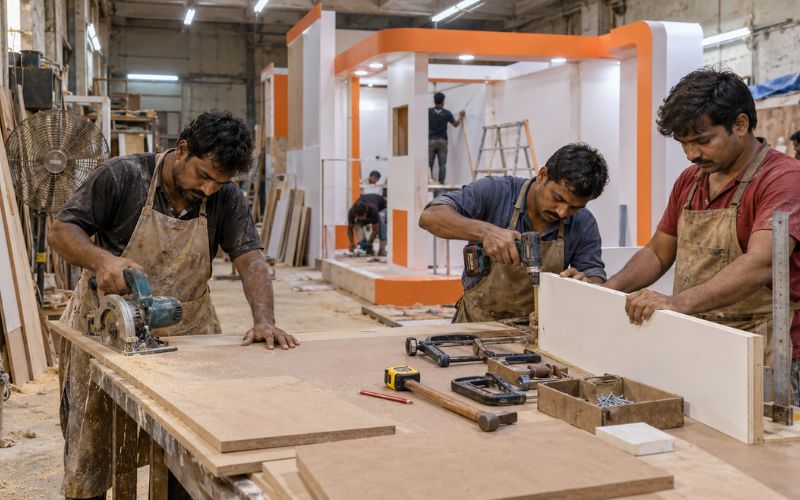
The designer-builder designs with the workshop in mind, so the drawing and the build match. This is the type that costs more at the start and less once problems are counted.
What a booth design package should contain
- Two or three concept directions, each with a short reason, not one design in different colours.
- A visitor flow diagram: where people enter, where they pause, where they talk and where they leave.
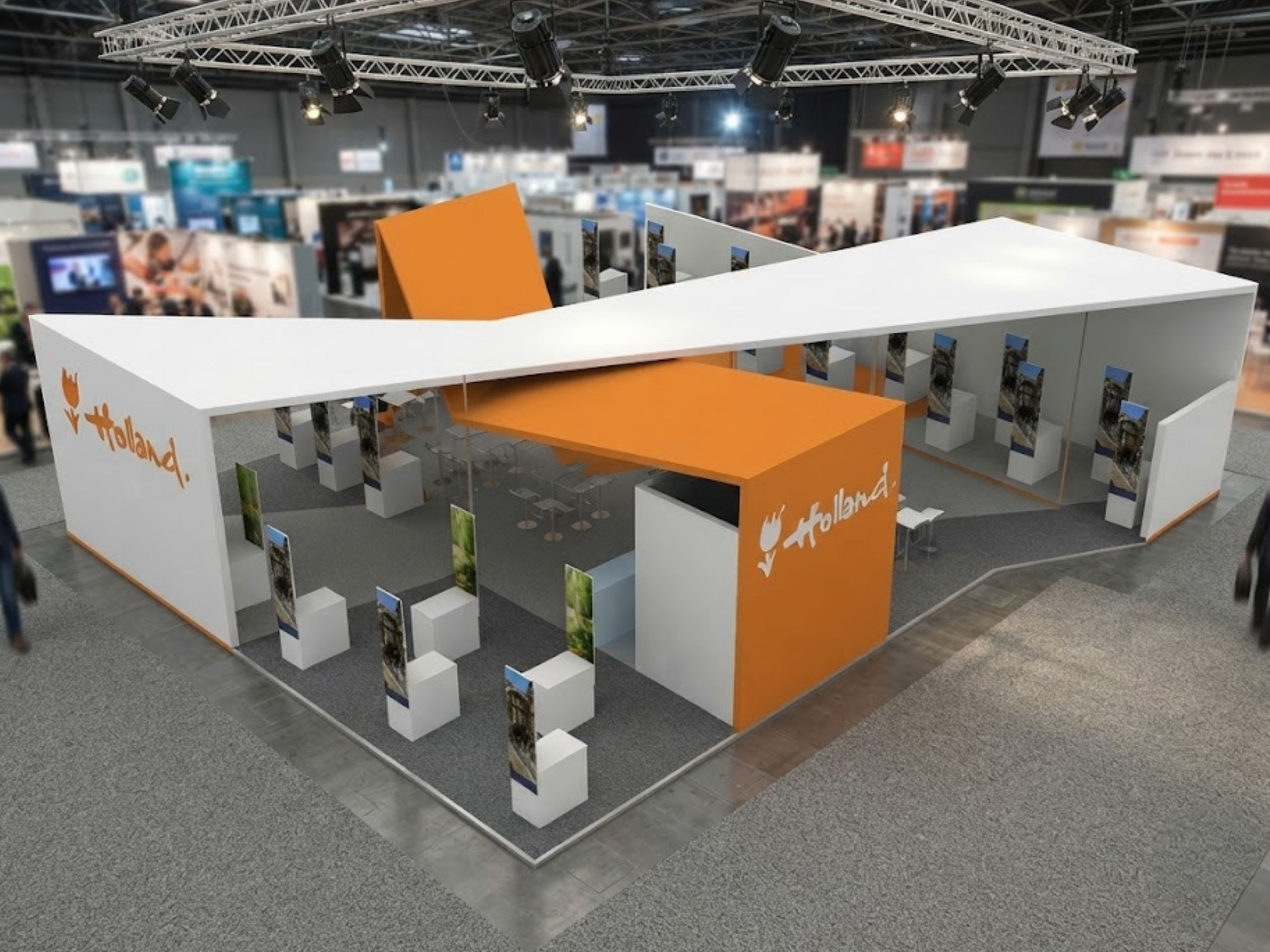
- 3D views from the aisle, at eye level, as well as from above.
- A graphics plan: what is printed where, at what size, and how it reads from ten metres.
- Working drawings with dimensions, materials and fixings, ready to send to the organiser.
- A materials and lighting note that says what each surface is made of and where each light falls.
Reading a 3D design with a sceptical eye
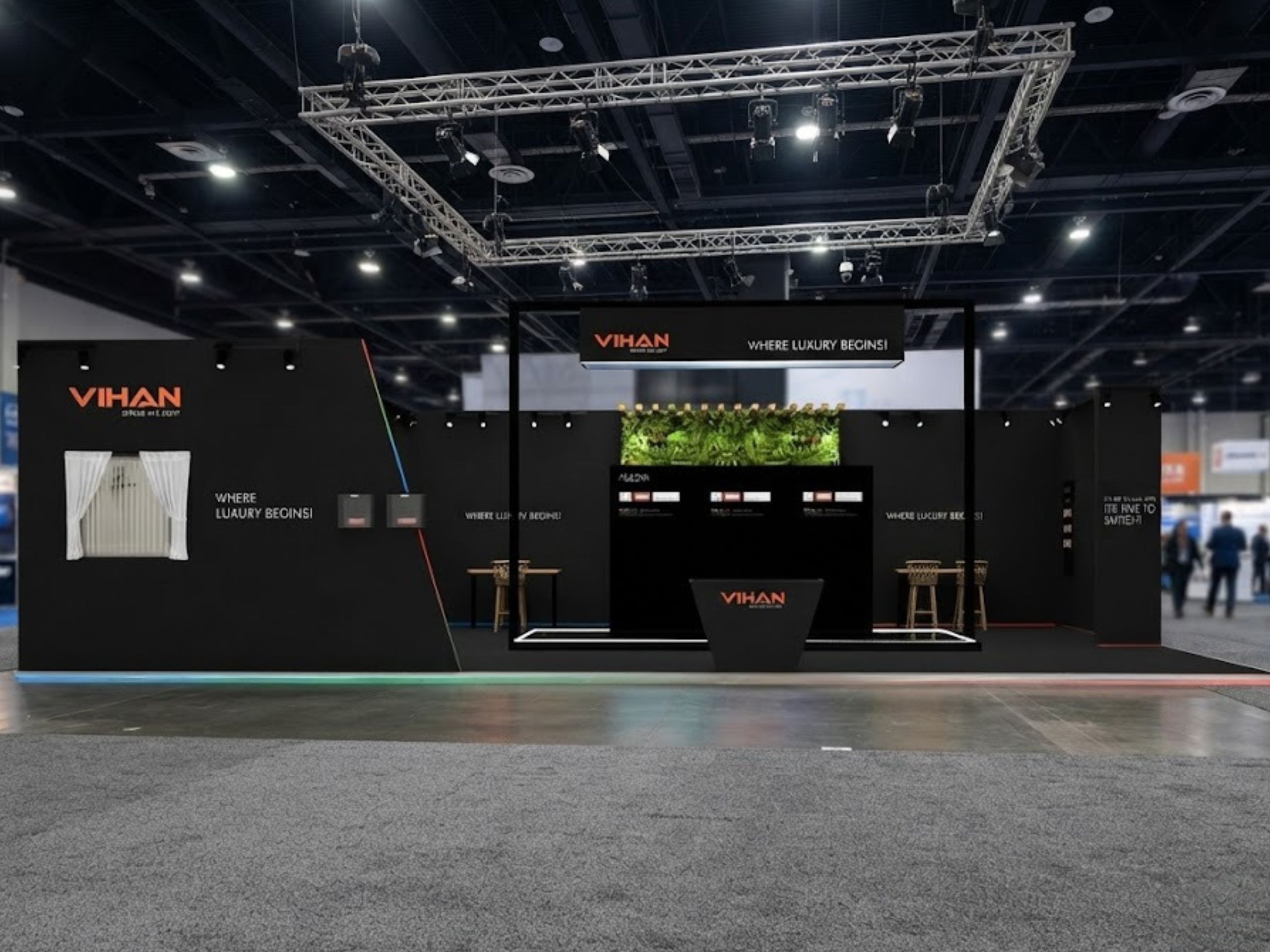
Look at the floor first: does the stand sit inside your footprint, with the correct open sides? Check the heights against the show’s limits. Look at the lighting: is it shown, and is it realistic for a show hall? Count the people in the render, because an empty, perfect stand hides how crowded the space will feel. Finally ask which furniture, plants and screens in the picture are actually in the quote.
Seven checks before you sign
- Is fabrication in-house, or passed to a subcontractor?
- Will you see a full 3D design and drawings before fabrication starts?
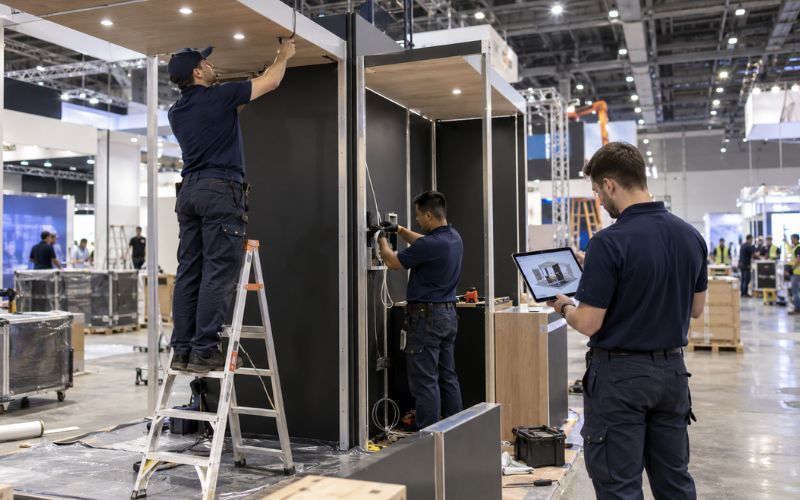
- Who from the team will be present during installation?
- Have they worked in your venue, and when?
- Is the quote itemised, or a lump sum?
- How are changes after approval handled and priced?
- Can the structure be reused, and what is the plan for it?
A worked brief: from one sentence to a concept
Imagine the brief says: “We sell water-treatment equipment and want a 36 sqm corner stand with a demo area and two meeting tables.” A designer who only renders will return an attractive box. A designer who thinks about trade show booth design will ask more.
- Which aisle is busier, so the main wall can face it?
- Which two products must be seen from ten metres, and which can be inside?
- How long is a demo, and how many people watch at once?
- How many meetings run at the same time, and do they need privacy?
- What should a visitor remember after walking past?
The answers shape the layout before any colour is chosen. The demo area sits near the busier aisle, the meeting tables sit at the back, and the tallest element carries the one message. Only after this does the render matter, because now it shows a plan, not a guess.
How to work with your designer: the 48-hour rule
Design moves as fast as your feedback. Agree a simple rule with your designer: you will return consolidated feedback within 48 hours of every round, and they will return a revision in a fixed number of days. Collect comments from your team into one list before you send them, because five separate emails from five people create contradictions that cost a round.
Be specific. “Make it more premium” is hard to act on. “Use a warmer light on the product wall and remove the plant from the counter” is easy. If you disagree internally, decide who has the final say before the process starts.
Keep every version, with dates, in a shared folder. When the show is over, this folder explains why each decision was made, and it becomes the starting point for the next stand. If you want to see how we run this, see our exhibition stand design company page.
Red flags in a design proposal
- A single concept presented as the only option.
- No mention of the hall’s height, flooring or power rules.
- Furniture and screens in the render that are not in the quotation.
- A timeline with no dates for your approvals.
- A reluctance to let you visit the workshop or speak to past clients.
For how a design becomes a built stand, read our 3D exhibition stand design page, and for reuse options see modular stands. Venue rules are worth reading directly on the NESCO website if you exhibit in Mumbai, and industry standards are summarised by UFI.
Frequently asked questions
How many concepts should a designer show me?
Two or three directions is a good number. One suggests the designer did not explore, and more than four usually means indecision.
Can I use a different company to build a design I like?
Yes, if you own the drawings. Agree this before the design is paid for, and ask for working drawings, not only renders.
How long does booth design take?
A first concept can take days. The full package, with revisions and approvals, usually takes several weeks, so start early.
What should I send to start?
The show, hall and stand number, size, open sides, products, brand files and a budget range.
Planning your next exhibition?
Tell us your show name, city and stand size and we will reply with a design direction and quotation within 24 hours.
Get a custom stand design for your next show
Share the show, stand size and budget. We reply within 24 hours.