

The first overseas show is where small mistakes get expensive. A missed deadline that costs an afternoon in Mumbai can cost a day of build-up in Barcelona, and nobody there can fix it for you.
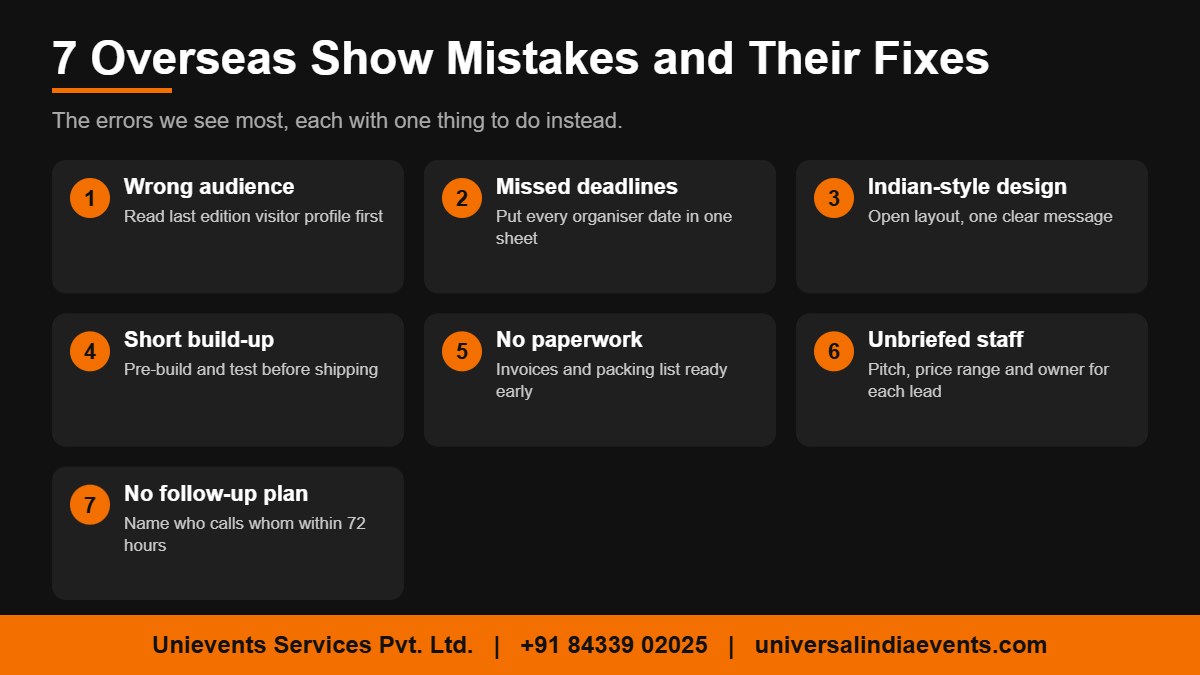
These are the seven mistakes we see Indian exhibitors make most often at overseas shows. Each one comes with what it looks like on the ground and one thing to do instead.
The short version
Choose the show by its buyers, keep one sheet of organiser deadlines, design for the visitor in front of you, pre-build and test, ready the paperwork, brief your staff, and decide who follows up before the show opens.
Mistake 1: Booking space before checking the audience
What it looks like: A big, famous show with a long exhibitor list, chosen because competitors go. The hall is busy but your buyers are somewhere else.
What to do: Spend an afternoon on five checks before you pay for space.
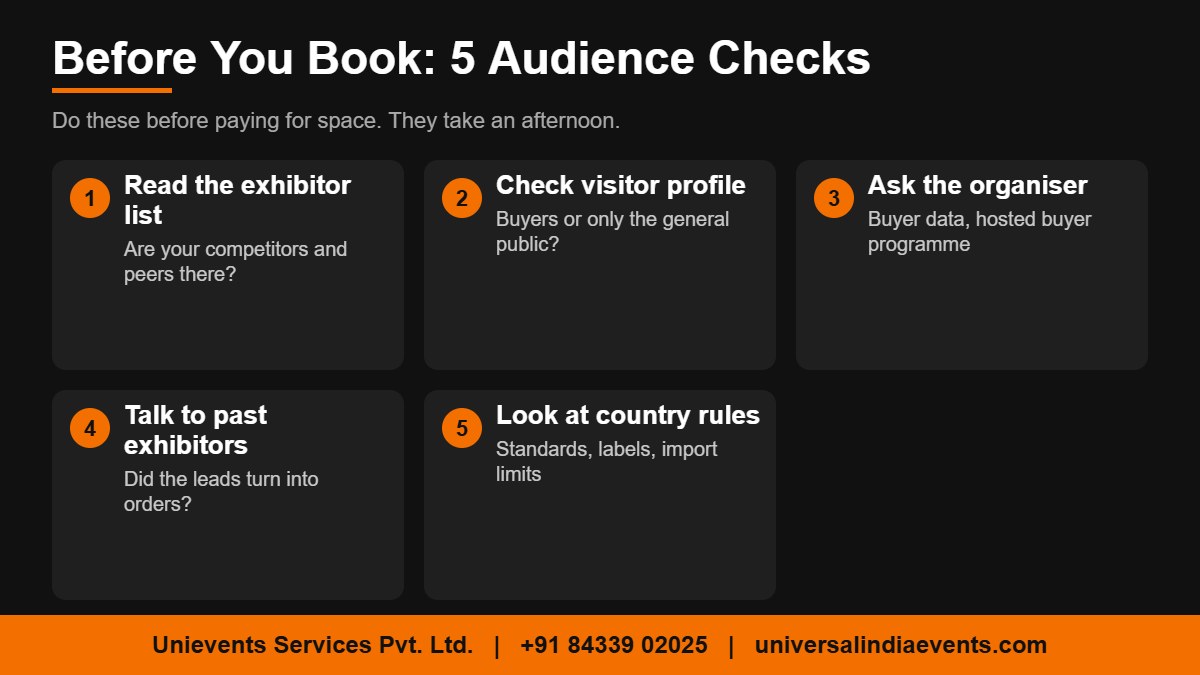
The last edition’s exhibitor list and visitor profile tell you more than the brochure. If your type of buyer is not there, even the best stand will not help.
A short example: an Indian packaging supplier picks a large European show because three competitors exhibit there. The last visitor profile shows most visitors are food brands looking for retail packaging, while the supplier sells industrial packaging to manufacturers. Same hall, wrong buyers. A smaller, focused show in the same country would have served them better, at a lower cost.
Mistake 2: Missing organiser deadlines
What it looks like: Stand plans sent late and rejected, electrical orders placed after the cut-off, graphics approved on the last day.
What to do: Copy every date from the exhibitor manual into one sheet with a name beside each. Rules for stand height, electrical load and plan approval differ by country, and the venue will not bend them. Your builder should be able to show you which of these dates fall on them and which on you.

Mistake 3: Designing for Indian habits
What it looks like: Every product on display, text on every panel, a counter that hides the team. It works in some Indian shows and loses visitors in Europe.
What to do: Pick one message, keep the layout open, and give visitors somewhere to talk. A buyer should understand who you are from ten metres away. Our guide to booth layout and lighting shows how.
Mistake 4: Underestimating build-up time
What it looks like: A stand that needs days of fixing on site, in a window that allows hours. Opening morning arrives with the carpet still going down.
What to do: Pre-build and test the parts before they ship, and send a builder’s team with them. The same stand looks very different when it was designed with the build in mind.

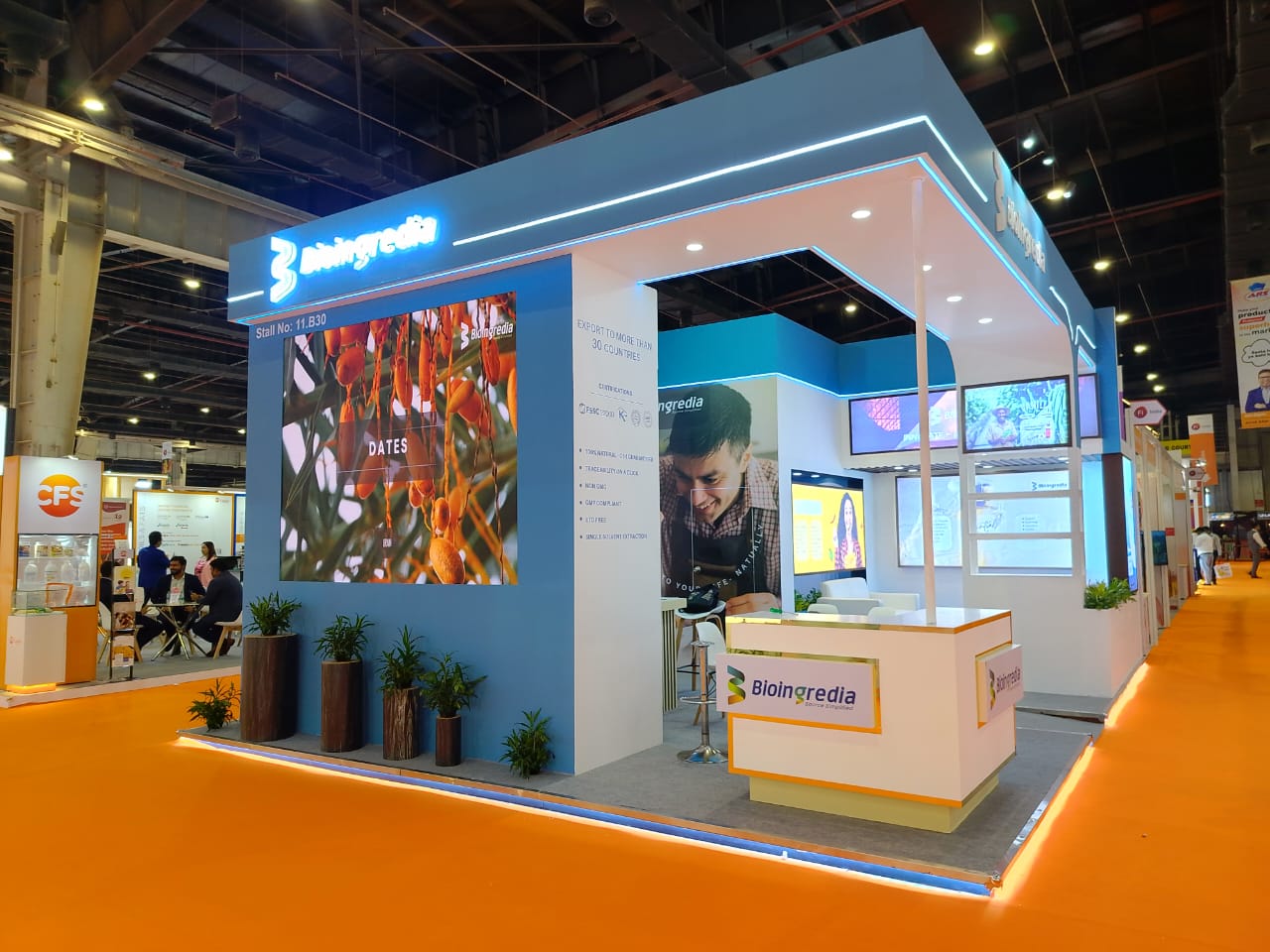
A render is only a promise. What counts is whether the finished stand matches it, as in the Bioingredia stand above. See more render-and-built pairs in our case studies, and read how a stand really gets built in a render is not enough.
Mistake 5: Sending goods without paperwork
What it looks like: A shipment held at customs while the show opens without your product.
What to do: Prepare invoices, packing lists and any temporary import papers before dispatch, and agree with your freight agent who files what. The full paperwork list is in our guide to the costs beyond the stand.
Mistake 6: Leaving staff unprepared
What it looks like: A visitor asks about price and three people look at each other.
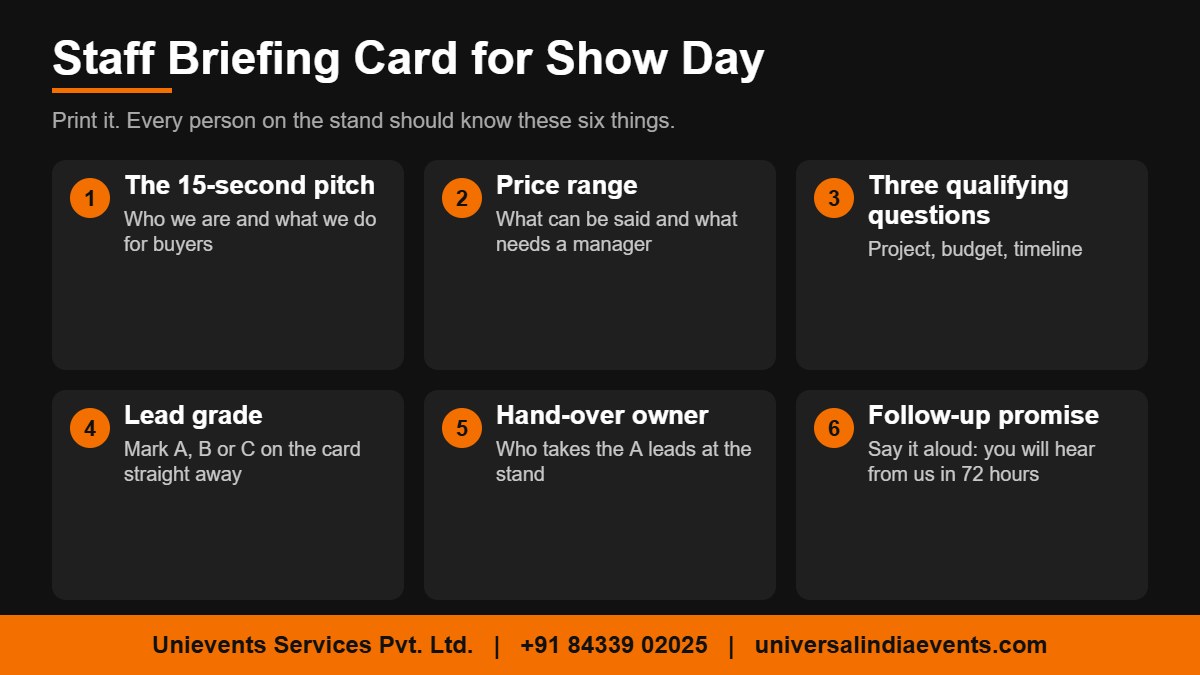
What to do: Give every person on the stand a one-page briefing card, and run a ten-minute practice before doors open.
Mistake 7: No follow-up plan
What it looks like: A bag of cards on the flight home and no idea who to call first. Leads that wait a week go cold.
What to do: Before the show opens, decide who contacts whom and by when. Grade each lead at the stand and follow the 72-hour follow-up plan. Afterwards, measure what the show earned with our ROI method.
How the first 90 days should look
Most of these mistakes disappear when the work is spread over enough time. A realistic plan for a first overseas show looks like this.
- Three to four months out: shortlist shows, run the five audience checks, and book space for the one that passes. Ask two or three builders for quotations on the same scope.
- Two to three months out: approve the design and the 3D render, send plans for organiser approval, and order venue services at the early rate.
- One to two months out: build and test the stand in India, book freight, prepare the paperwork and brief your visa and travel plans.
- The last month: pack, ship, brief staff, set up the lead sheet and send invitations to the buyers you want to meet.
- During the show: grade every lead, keep notes, and hold a ten-minute review each evening while memories are fresh.
- After the show: follow up within 72 hours, then review at 30, 60 and 90 days.
The timings stretch or shrink with the show and the country, but the order stays the same. If you are short on time, our guide on how long a stall build takes shows what can safely be compressed and what cannot.
What a good builder does differently
A builder with overseas experience does not wait for you to ask. They send a deadline list in the first week, flag the venue rules that affect the design, show you the stand tested in their workshop, and keep a supervisor at the venue through build-up. If your builder is quiet on these points, ask directly, because silence usually means the work is still ahead of you.
A quick scorecard
| Mistake | Early warning sign | Fix that costs least |
|---|---|---|
| Wrong audience | You chose the show because a rival is there | Read the last visitor profile |
| Missed deadlines | No one owns the date sheet | Name an owner per deadline |
| Indian-style design | More than three messages on a panel | One message, open layout |
| Short build-up | Stand never tested before shipping | Pre-build and test |
| No paperwork | Freight agent not yet chosen | Appoint one early |
| Unprepared staff | No briefing planned | One-page card and a practice |
| No follow-up | Owner not named | Decide it before the show |
What helps most
Work backwards from the show date, give each task one owner, and choose a builder who has already handled the same country. Our 30-day exhibitor checklist is a good place to start the countdown, and the guide to builders for overseas shows explains what to ask.
Frequently asked questions
What is the most common first-time mistake?
Choosing a show on reputation instead of checking who actually visits it. Everything else can be fixed on the way, but the wrong audience cannot.
How early should I start planning an overseas show?
As early as the organiser opens bookings. Early planning gets better stand positions, lower service rates and calmer build-up.
Do I need to send my own team?
Your sales people should be on the stand. For the build, it helps to have your stand builder’s supervisor on site, since they know the plans and the venue rules.
Can a stand built in India be used abroad?
Yes. Many stands are built and tested in India and shipped to the venue, which is why pre-building and good packing matter.
Going abroad for the first time?
Send us the show name, stand size and dates and we will reply with a custom quote within 24 hours.
Get a custom stand design for your next show
Share the show, stand size and budget. We reply within 24 hours.